 PerroAmante
Travel
Travelling with my dog stresses us both
Understand what unsettles your dog, prepare the trip with a 10-minute list and arrive calm anywhere.
What is going on
A dog that gets carsick, pants the whole journey, will not eat at the hotel or does not relieve itself for two days away from home. Travelling with a dog can be one of the best parts of living with one, and also a source of stress that leads many owners to leave the dog at home.
For a dog, a trip is an accumulation of novelties: a car that moves, smells that change every hour, a place to sleep that does not smell of it, broken schedules, different water, unfamiliar people and dogs. Each one alone is manageable. All together, unprepared, they overwhelm many dogs, especially those already sensitive at home.
Carsickness has its own logic. The dog's inner ear detects movement, but its eyes, if it is lying on the car floor, see nothing to confirm it. That mismatch produces nausea, drooling and discomfort. It is more common in puppies, whose balance system is still maturing, and it gets worse if the dog already associates the car with something unpleasant, like a vet visit.
The good news is that most travel stress is prepared for at home, weeks ahead, and organised with a short list on the day. Here we cover both, and also when a dog that cannot tolerate travel needs more than preparation.
The usual road and the PerroAmante road. What people usually try: setting off on a trip without ever having done a short practice drive, packing whatever comes to mind at the last minute and forgetting the water or the vaccination record, or giving the dog a forum sedative without asking anyone. They fail because the dog arrives already overloaded before leaving the city. The Protocolo PerroAmante works in a different order: Understand what specifically unsettles your dog, Care with gradual car training and a travel kit that is always ready, and Maintain with a list repeated the same way every time and a community that knows the places you are going. It is like preparing a child for the first day of school: you visit the place beforehand, bring something from home and do not just leave them at the gate.
Common causes
- 01
Motion sickness
The mismatch between what the inner ear senses and what the eyes see produces nausea, drooling and discomfort, especially in puppies.
- 02
Negative association with the car
If the only trips have ended at the vet, the car itself triggers anxiety before the engine starts.
- 03
Lack of practice
A dog that travels twice a year has no chance to learn that the car and new places are safe.
- 04
Broken routines
Eating, walking and sleeping at different times in different places upsets digestion and rest.
- 05
Heat and ventilation
A car in the sun or a poorly ventilated crate raises the dog's temperature quickly and adds physical discomfort to the stress.
- 06
A place that does not smell of home
Sleeping without its blanket, its smells, and with unfamiliar noises means many dogs neither rest nor eat for the first few days.
Warning signs to watch
- Drools, yawns insistently or licks the lips as soon as the car starts
- Vomits on short trips or refuses to get in
- Pants, trembles or is constantly restless during the journey even when it is not hot
- Does not eat or drink at the destination for more than a day
- Does not relieve itself for more than 24 hours away from home
- Barks or whines at the accommodation and will not lie down
- Diarrhoea or vomiting in the first days of the trip
When to contact a vet
See your vet before travelling if your dog vomits on every trip, if the fear of the car is so intense that it trembles or hurts itself trying to escape, or if it has a condition that needs medication: there are options for motion sickness and anxiety that only a vet can assess and prescribe. Do not use human sedatives or forum remedies.
During the trip, find a vet at your destination if the dog does not drink for more than 24 hours, vomits or has diarrhoea for more than a day, pants excessively with very red or very pale gums, or is flat and not responding as usual. For trips abroad, ask well ahead about the documentation and vaccinations the destination country requires.
This information is educational and does not replace a veterinary assessment.
Everyday care
Train the car from scratch
Weeks ahead: get into the parked car, treat, get out. Then engine on without moving. Then a lap around the block that ends at the park. Short, good trips before the long one.
Safety and position
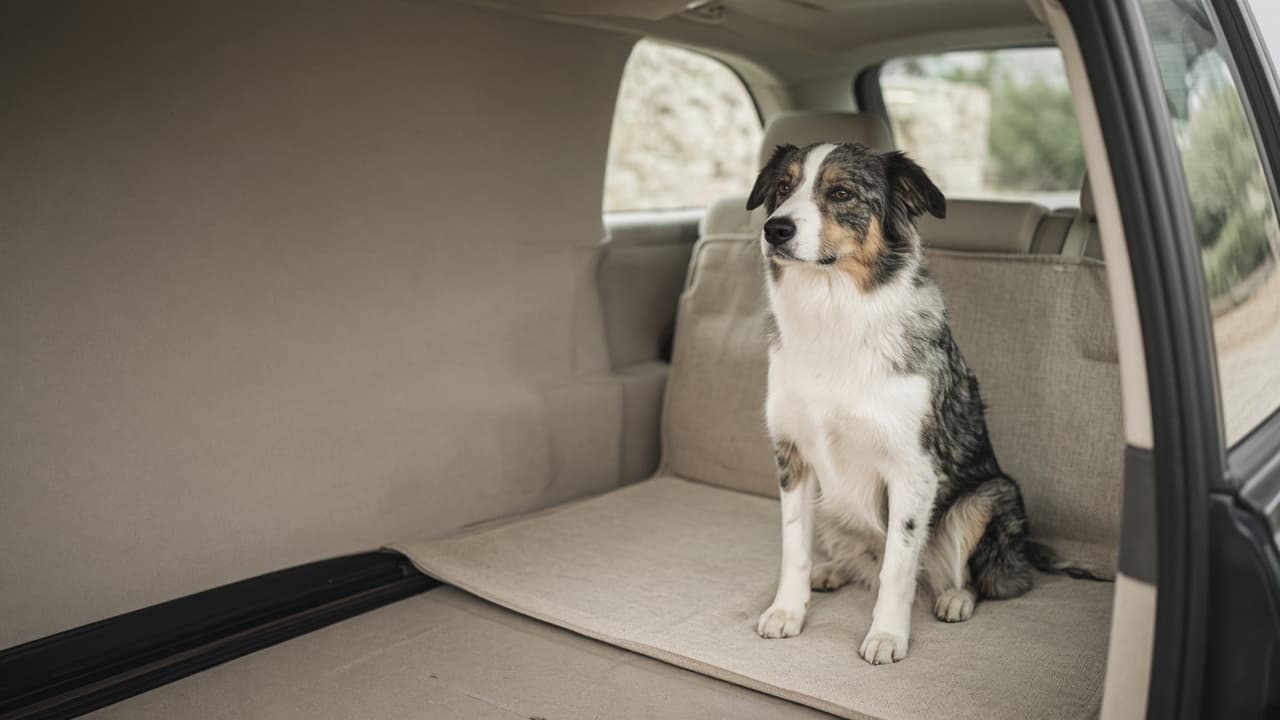
A certified travel harness clipped to the seat belt or a sturdy, ventilated crate, always on the back seat. Being able to see out of the window helps with sickness; fresh air does too.
Nearly empty stomach
Last meal two or three hours before leaving. Water always available, in small amounts. Stops every two hours to drink, walk and relieve itself.
Travel kit always ready
A bag with measured food, a collapsible bowl, water, its blanket, a toy, poo bags, wipes, the vaccination record and your vet's phone number. Kept packed and restocked on return.
Routines that travel
Keep everyday meal and walk times as much as you can. On the first day at the destination, a long, calm walk before anything else.
Its smell at the destination
Its blanket or bed from home, unwashed before leaving, in the spot where it will sleep. It is the fastest signal that this place is safe too.
Care
Solutions for this problem
A short selection. Every product passed our 7-criteria score; we tell you what it does and does not do.
We are completing the selection for this problem.
Community experiences
PerroAmante Circle
Join the PerroAmante Circle
Your first purchase opens the door to our private community: problem-specific discussions, local vet and groomer recommendations, and reorder support.
Guides and articles
Coming soon.
Recommended professionals
Vets and groomers who help with this problem, recommended by members.
Frequently asked questions
How do I stop my dog getting carsick?
Nearly empty stomach, a position with a view out of the window, fresh air and short practice drives over several weeks. The proof it is working is a dog that lies down and sleeps before the first stop. If it still vomits on every trip regardless, your vet has options only they can prescribe.
What if my dog will not eat or relieve itself at the destination?
The first day is common, especially in sensitive dogs. A long walk on arrival, its blanket from home and its usual schedule usually unblock things within 24 hours. If it goes more than a day without drinking or two without eating, find a vet wherever you are.
Should a vet see my dog before we travel?
If it always vomits, if the fear is intense or if it takes medication, yes, and well in advance. The vet can prescribe something for sickness or anxiety; we help with the rest: car training, the kit and the routine. The two together make the trip possible.
What if the kit and the routine do not work for my dog?
The products in the kit come with a 90-day guarantee and, if you see no difference, we refund you. But we will tell you something more important: if after weeks of gradual training your dog still suffers in the car, the answer lies with a trainer or your vet, not with another product.
Join the PerroAmante Circle
Your first purchase opens the door to our private community: problem-specific discussions, local vet and groomer recommendations, and reorder support.