PerroAmante
Mouth: teeth and breathBad breath
How to get your dog to accept tooth brushing in 30 days
Daily brushing is the only thing that stops plaque before it becomes tartar. The secret is not the brush, but the first four weeks.
By Equipo PerroAmante · 5 July 2026 · 7 min read · Veterinary editorial team
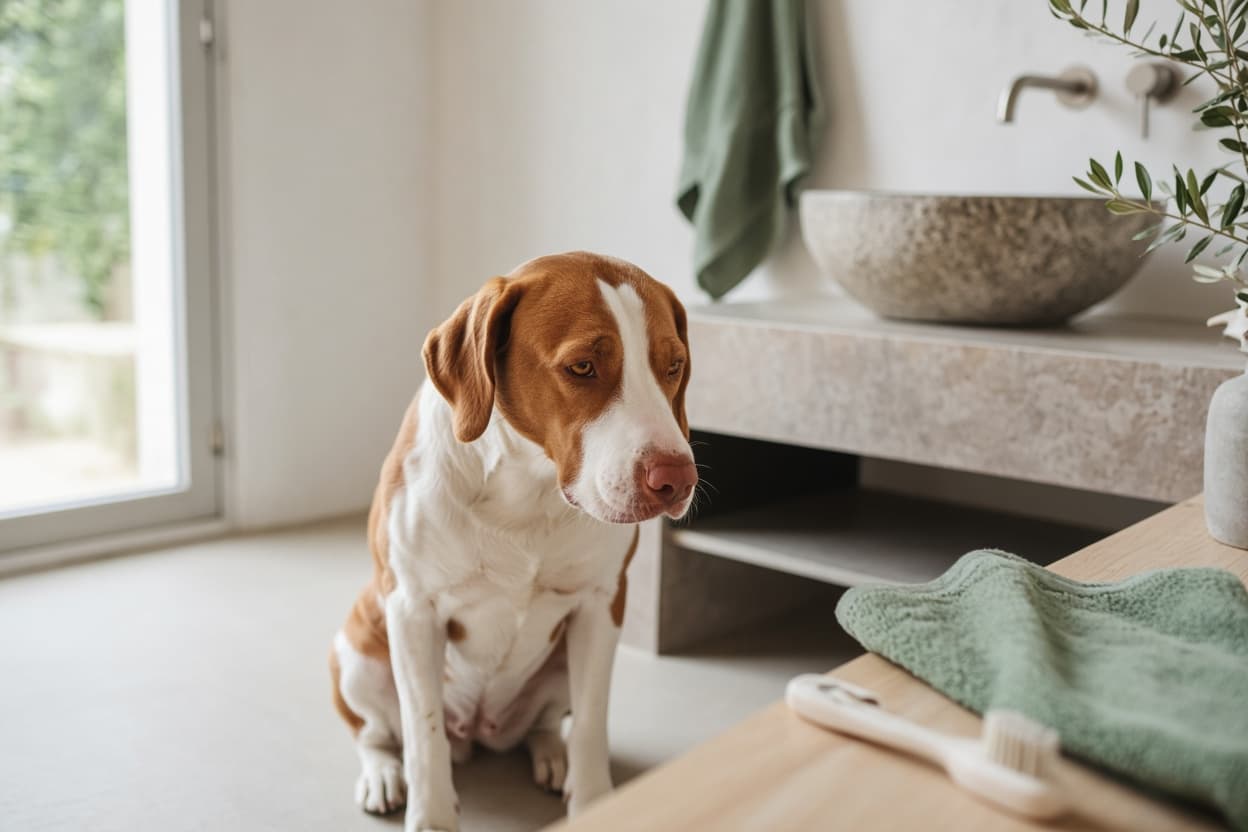
Everyone knows you should brush your dog's teeth. Almost nobody does. The reason is not laziness: it is that the first attempt usually ends with a dog clamping its mouth shut, turning its head and walking off, and an owner deciding their dog is not one of those dogs.
There are no such dogs. There are dogs that have been taught slowly and dogs that had a brush pushed into their mouth on day one. This is a four-week plan to go from zero to one minute of daily brushing without a fight.
Why it is worth it
Plaque is a film of bacteria that forms on the teeth within hours of eating. If nobody removes it, minerals in saliva harden it within two or three days into tartar, which no brush can shift. Tartar grows towards the gum, the gum becomes inflamed, and from there come bad breath, bleeding and, over the years, lost teeth.
A professional cleaning under anaesthesia costs 150 to 400 euros. A brush and a dog toothpaste cost far less and last months. But the point is not the money: brushing is the only thing that removes plaque before it hardens. Dental treats, dry kibble and water additives help on the surface; none of them reaches the gum line.
What you need
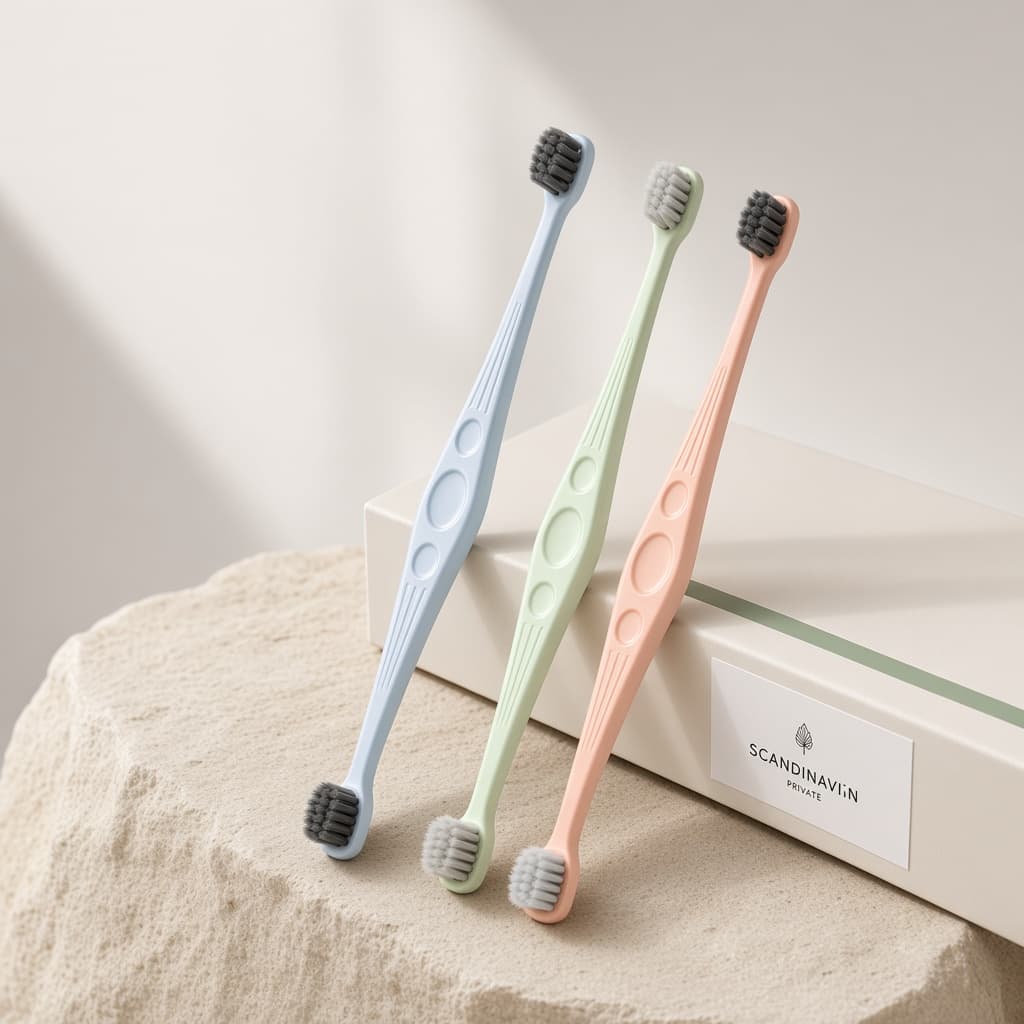
A soft-bristle brush sized for your dog, or a silicone finger brush if the dog is small or you feel safer with a finger. A toothpaste formulated for dogs: human ones contain fluoride and foaming agents the dog swallows. Small treats the dog really likes. And a fixed moment in the day, always the same, when the dog is calm and has not just eaten.
Week 1: the mouth is a pleasant place
No brush. Each day, at your fixed moment, sit with the dog, touch the muzzle gently for a second, reward. Repeat five times. In the last days, lift the lip for a second, reward. Nothing more. If the dog pulls its head away, you went too fast: go back a step.
Week 2: the finger and the flavour
Put a little dog toothpaste on your finger and let the dog lick it. Most pastes taste of meat or chicken and this is usually welcome. Then, with paste on your finger, touch the outer teeth for a second. Reward. Extend gradually until you can run your finger along the teeth on one side, then the other. By the end of the week you should be able to rub the molars on both sides for a few seconds.
Week 3: the brush appears
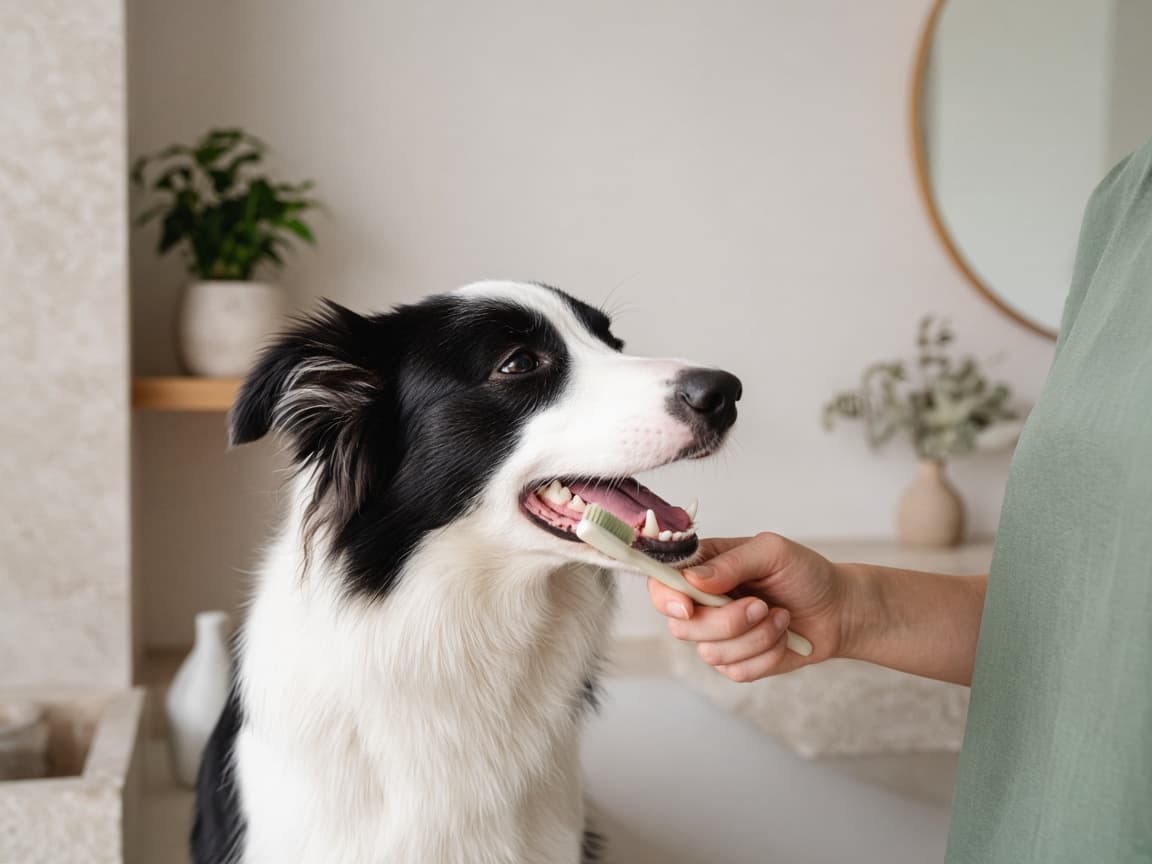
Leave the brush in sight with paste on it and let the dog sniff and lick it. Then touch the outer teeth with the brush for a second, reward. Extend little by little. The goal is to brush the molars on one side, the teeth furthest back, for ten seconds with short strokes along the gum line. The front incisors are the most sensitive and the last to come.
Week 4: the full routine
One minute in total. Molars on one side, molars on the other, canines, incisors if allowed. Short strokes, no pressure, following the gum line. A treat at the end, always. If one day the dog will not have it, you brush one side only and do more tomorrow. Never hold the head by force: a single day of struggle undoes three weeks of work.
How to know it is working
Photograph the molars on each side on day one and every month after. Good light, lip lifted. If the yellow line at the base of the teeth is not growing, the routine is working. If the redness of the gum is receding, so is that. And the breath, within two or three weeks, changes in a way you will notice without looking for it.
The PerroAmante routine
Understand: plaque hardens within 72 hours, so only daily brushing stops it. Care: one minute a day, soft bristles and dog toothpaste, molars first, along the gum line, treat at the end. Maintain: a monthly photo of each side, a new brush every three months, and a mouth check with your vet once a year.
When to see the vet
If lifting the lip shows blood, a loose, broken or greyish tooth, a very red or swollen gum, or a thick brown deposit already formed: brushing maintains, but what is already hard can only be removed by a professional cleaning. If your dog stops eating, drools, rubs its mouth with its paws or has a new sweetish smell unlike the usual one, book an appointment without waiting. And if the dog is over seven and has never had a mouth check, have one before starting the plan.
This information is educational and does not replace a veterinary assessment.