PerroAmante
Dog shedding: how long it lasts, why it never ends in a flat and how to manage it
Two sheds a year lasting three to six weeks is normal. If yours lasts all year, the heating is more to blame than the dog. A season-by-season guide.
By Marta Vidal · 20 August 2026 · 7 min read · Writer, PerroAmante editorial team
September. You are back from holiday, your dog starts dropping hair and you wonder whether this is normal, or whether it was like this in spring too and you have forgotten. Yes, it was. And in a flat with central heating, it probably never fully stopped in between either. This is the guide to understanding what is happening and what changes with each season.
How the hair cycle works
Each hair grows, rests and falls, and another takes its place. In nature, daylight is the clock: when days lengthen in spring, the dog drops its winter coat; when they shorten in autumn, it drops the summer coat and grows the thick one. Two intense, brief sheds of three to six weeks each.
Indoors, the clock goes wrong. Artificial light until midnight, twenty degrees in January, air conditioning in August. The dog's body does not know what season it is, and many apartment dogs shed a little all year round, with two slightly stronger peaks. It is not a health problem; it is a consequence of living inside.
Every coat sheds differently
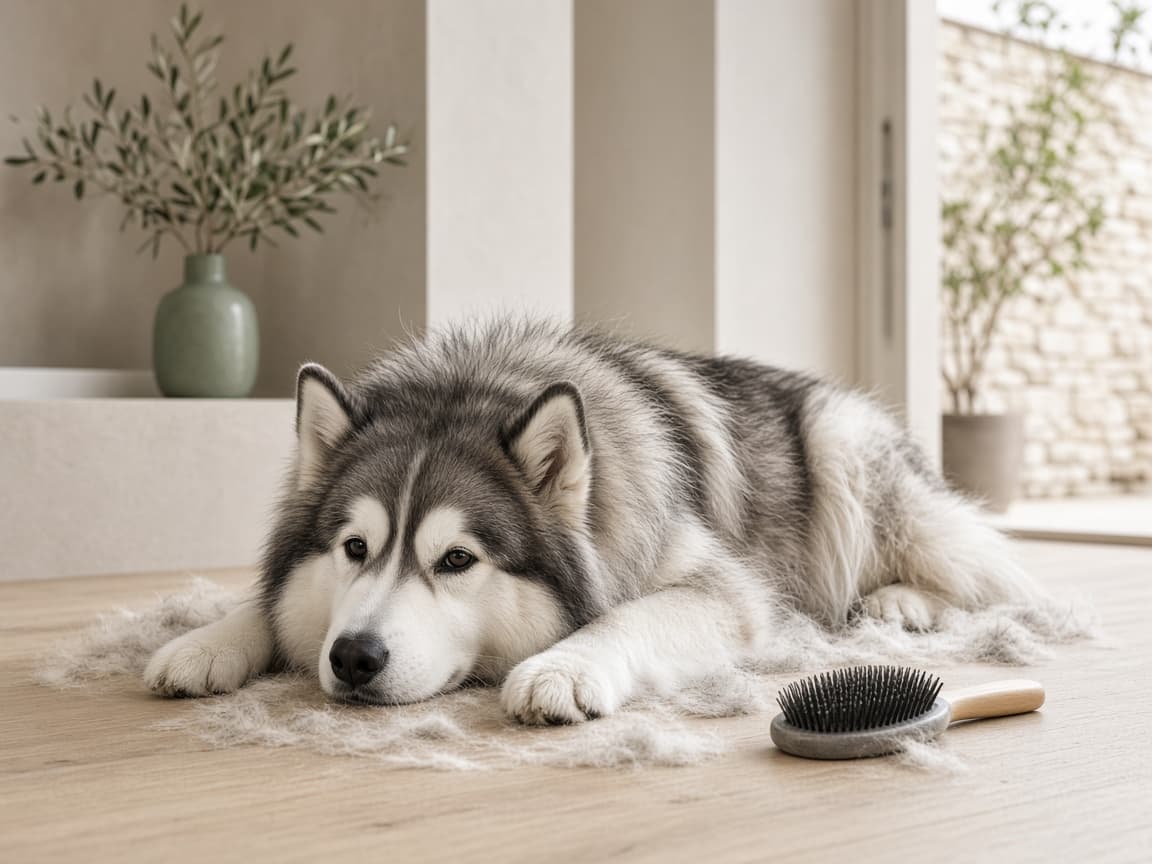
Double coats, on shepherds, huskies, goldens and spitz breeds, release the undercoat in cottony tufts that come out by the handful. It is the most visible shed and the shortest if brushed well.
Short coats, on boxers, beagles and labradors, drop fine, stiff hairs, few at a time but constantly. They spear into fabric and are the hardest to get off the sofa.
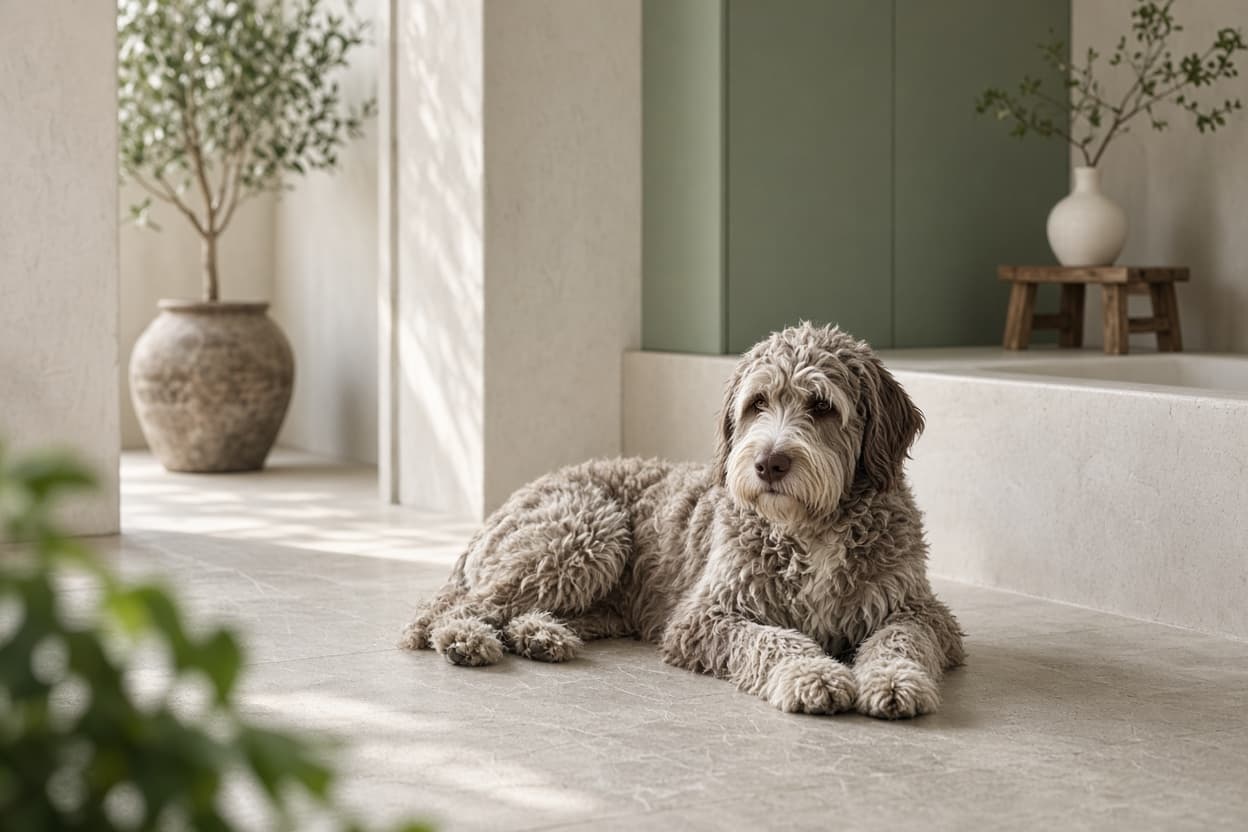
Curly coats and long clipped coats barely shed outwards, but dead hair stays inside the coat and, if not combed, forms knots. Here the shed is not seen; it is felt in the comb.
Spring
The winter-to-summer shed. It starts with the first long days, between March and April, and lasts until May. It is the heaviest in double-coated dogs.
What to do: daily brushing with an undercoat rake on double coats, a rubber glove on short coats. A bath halfway through the shed with a thorough blow-dry loosens a lot of dead hair at once. Brush before and after.
Summer
Between sheds. Hair falls little and the summer coat should be settled. If in mid-July the dog is still dropping handfuls, look at diet and stress, or ask the vet.
What to do: maintenance brushing two or three times a week. Never shave for the heat: the coat insulates from the sun and a shaved undercoat may not grow back the same.
Autumn
The summer-to-winter shed, between September and November. Less dramatic in volume than spring, but in flats where the heating comes on early it drags on.
What to do: the same as in spring, and watch the skin: heating lowers humidity and dries the skin, adding dandruff to the hair. A soft-pin brush spreads natural oils.
Winter
The coat should be resting. If your dog sheds noticeably in January, the heating is the first suspect: twenty degrees and dry air. Turn it down a degree, air the flat every morning and humidify if you can.
What to do: brushing twice a week, and attention to dull or brittle hair. Ask your vet whether the diet provides enough fatty acids; changes in the coat take six to eight weeks to show.
The house during the shed
Brush outside or on a sheet you shake out afterwards. A washable blanket on the dog's spot on the sofa. Vacuum with an upholstery brush twice a week. And the most useful rule: every minute of brushing is ten minutes less with the lint roller.
The PerroAmante routine
Understand: two sheds a year of three to six weeks; in a flat, a little all year because of light and temperature. Care: the tool that reaches the undercoat, ten minutes a day during the shed and two or three times a week otherwise, a bath with a thorough blow-dry mid-shed, never shaving. Maintain: quality fats in the diet with the vet's approval, the flat a degree cooler and aired, a washable blanket, and a refill of any supplement before the next season.
When to see the vet
If bald patches, symmetrical hairless areas or visible skin appear. If the skin under the coat is red, dark, scabbed or smelly. If the hair loss comes with intense itching, more thirst, weight changes or less energy. If hair falls out in clumps in any season with nothing changed. And if a shed has not finished after eight weeks: that is no longer a shed, and someone should look beyond the brush.
This information is educational and does not replace a veterinary assessment.