 PerroAmante
Shedding
My dog sheds a huge amount and the house is covered in hair
Understand the shed, brush with the right tool for 10 minutes a day and get the sofa back.
What is going on
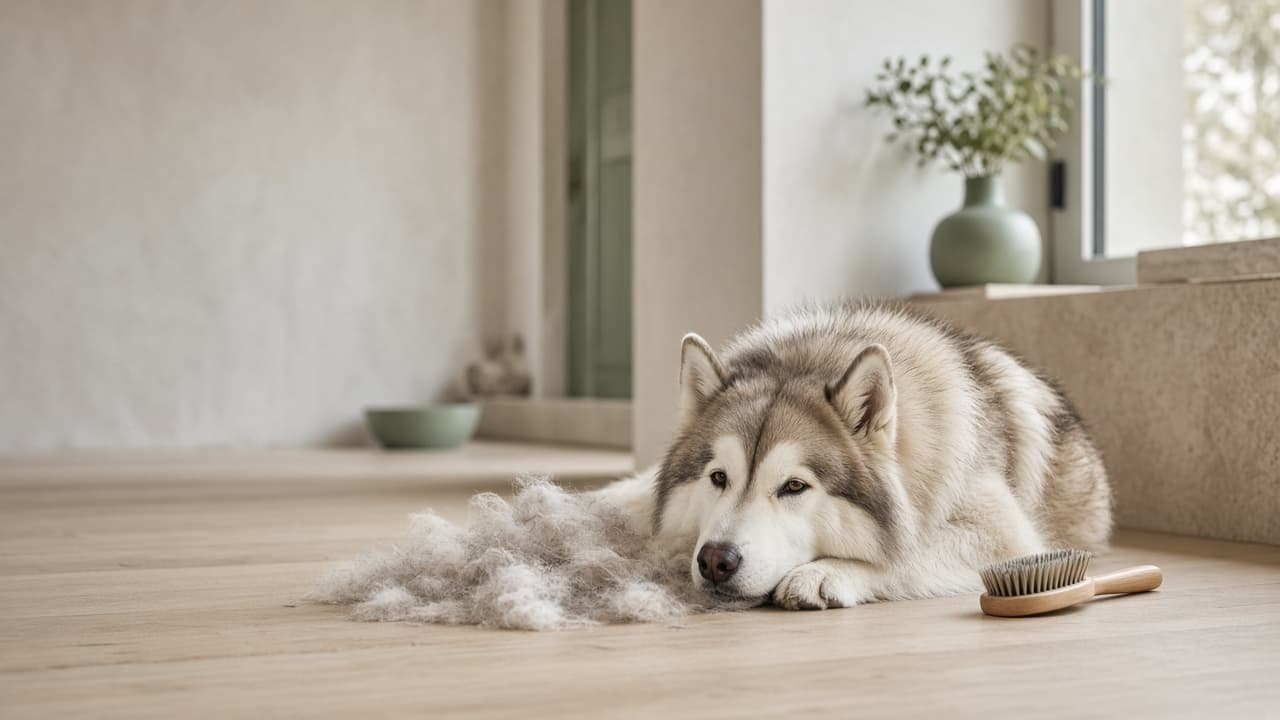
Hair on the sofa, on black clothes, floating in a sunbeam. If you live with a dog, you live with its hair. But there is a difference between normal everyday hair and a shed that never seems to end, or that comes with bald patches, dandruff or itching.
A dog's hair grows in cycles: a growth phase, a rest phase and a shedding phase. In nature, changes in light and temperature synchronise those cycles and shedding happens in spring and autumn, intense and brief. In a flat with central heating, artificial light and twenty degrees all year round, that synchrony is lost and many dogs shed a little all the time.
Double-coated breeds release their undercoat in tufts that look like cotton wool. Short-coated breeds drop fine, stiff hairs that spear into fabric and are harder to remove. Curly-coated breeds barely shed, but the dead hair stays inside the coat and forms knots. Each type calls for a different tool and frequency.
What no brush can do is stop hair loss that comes from inside. A diet poor in quality fats, parasites, stress or a change in the body show up first in the coat. That is why, when the shed changes suddenly or the coat loses its shine for no reason, we look beyond the brush.
The usual road and the PerroAmante road. What people usually try: shaving the dog so it sheds less, any old brush that combs the surface while the undercoat keeps falling, or vacuuming twice a day and giving up. They fail because the hair that is going to fall is still there, and only where it ends up changes. The Protocolo PerroAmante works in a different order: Understand which coat your dog has and when it sheds, Care for it with the tool that reaches dead hair and ten minutes a day in season, and Maintain with nutritional support if your vet thinks it appropriate and timely refills. It is like autumn leaves: better to gather them from the tree in the garden than wait for them to come indoors.
Common causes
- 01
Seasonal shedding
In spring and autumn the dog renews its coat. In double-coated breeds the amount can be surprising, and it lasts three to six weeks.
- 02
Indoor living
Heating, air conditioning and artificial light disrupt the hair cycle, and many apartment dogs shed a little all year.
- 03
Too little brushing, or the wrong tool
Dead hair not removed with the right tool ends up on the sofa or, in long-coated breeds, in knots.
- 04
Diet
A diet low in quality fatty acids or sufficient protein gives a dull, brittle coat that falls more than normal.
- 05
Stress
Moving house, vet visits or changes at home can cause sudden, temporary hair loss.
- 06
Parasites or irritated skin
Fleas, mites or inflamed skin make the dog scratch and pull out hair, and the loss stops being even.
Warning signs to watch
- Intense shedding lasting more than six to eight weeks without easing
- Bald patches, very thin areas or visible skin
- Dull, brittle hair that breaks rather than falling whole
- Dandruff, red skin or itching alongside the hair loss
- Tufts that come away easily with a gentle pull anywhere on the body
- Loss concentrated in one spot: flanks, tail base, neck
- Losing hair while also drinking more, eating differently or seeming flat
When to contact a vet
See the vet if bald or symmetrical hairless patches appear, if the skin beneath is red, dark, scabbed or smelly, if the hair loss comes with intense itching, thirst, weight changes or less energy, or if hair falls out in clumps in any season with no change in routine. A shed that does not finish within two months is not normal either.
In puppies, the change from puppy coat to adult coat is normal around four to six months. In senior dogs, a coat that changes texture or colour overall is worth mentioning at the next check-up.
This information is educational and does not replace a veterinary assessment.
Everyday care
A tool that reaches the undercoat
Double coat: undercoat rake or de-shedding tool, without pressing. Short coat: rubber glove or brush that grips stiff hair. Long coat: pin brush and metal comb. The surface is not the problem.
Frequency by season
During the shed, ten minutes a day. The rest of the year, two or three times a week. Short, frequent sessions beat one long Sunday session.
Brush outside or on a sheet
On the balcony, the terrace or an old sheet you shake out afterwards. What you collect in the brush is what you do not collect from the sofa.
A bath mid-shed
A bath with a suitable shampoo and a thorough low-heat blow-dry loosens a lot of dead hair at once. Brush before and after.
Diet and quality fats
Ask your vet whether the diet provides enough fatty acids. A shiny coat starts in the bowl, and changes show within six to eight weeks.
Easy textiles
A washable blanket on the dog's spot on the sofa and removable covers. Fewer hours fighting the lint roller.
Care
Solutions for this problem
A short selection. Every product passed our 7-criteria score; we tell you what it does and does not do.
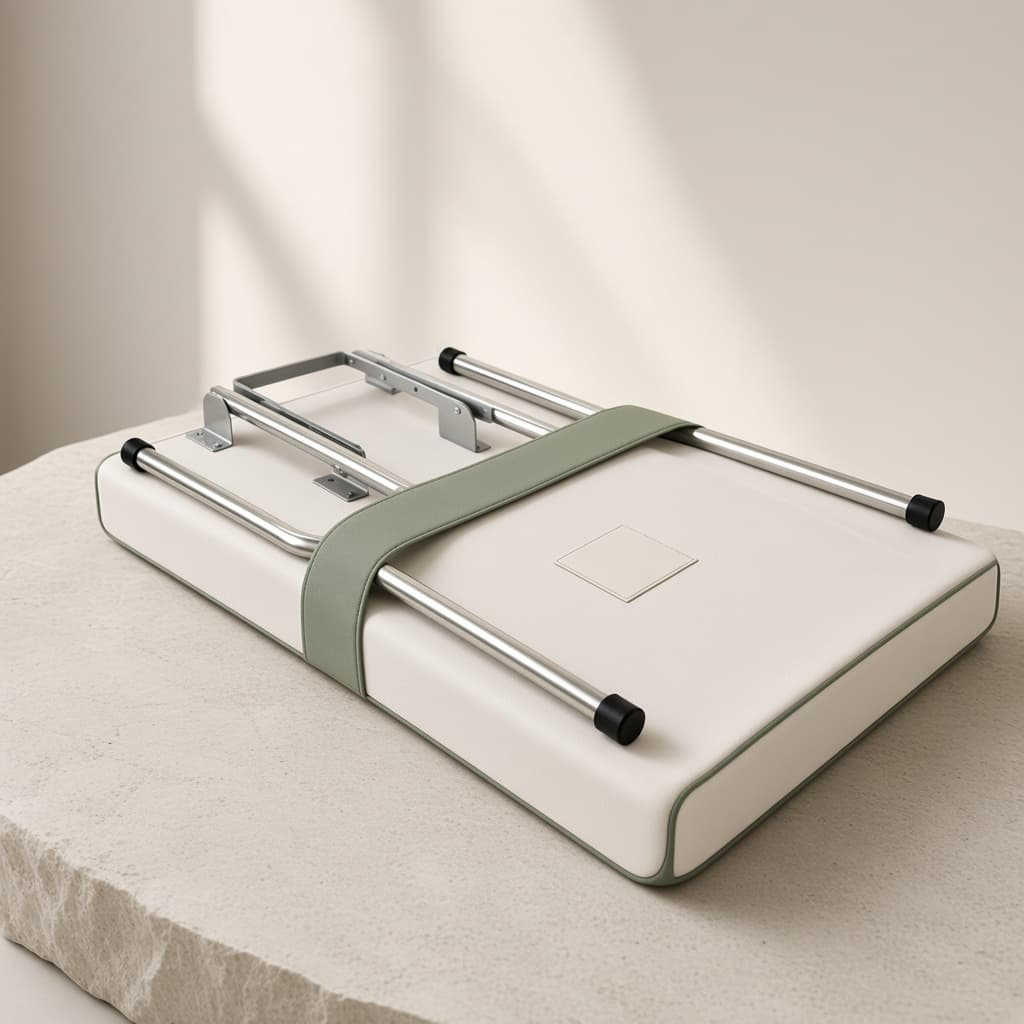
Folding grooming table with arm and noose
Brings the dog up to the height of your hands and keeps him there, so the session does not end on the bathroom floor.
€247.90
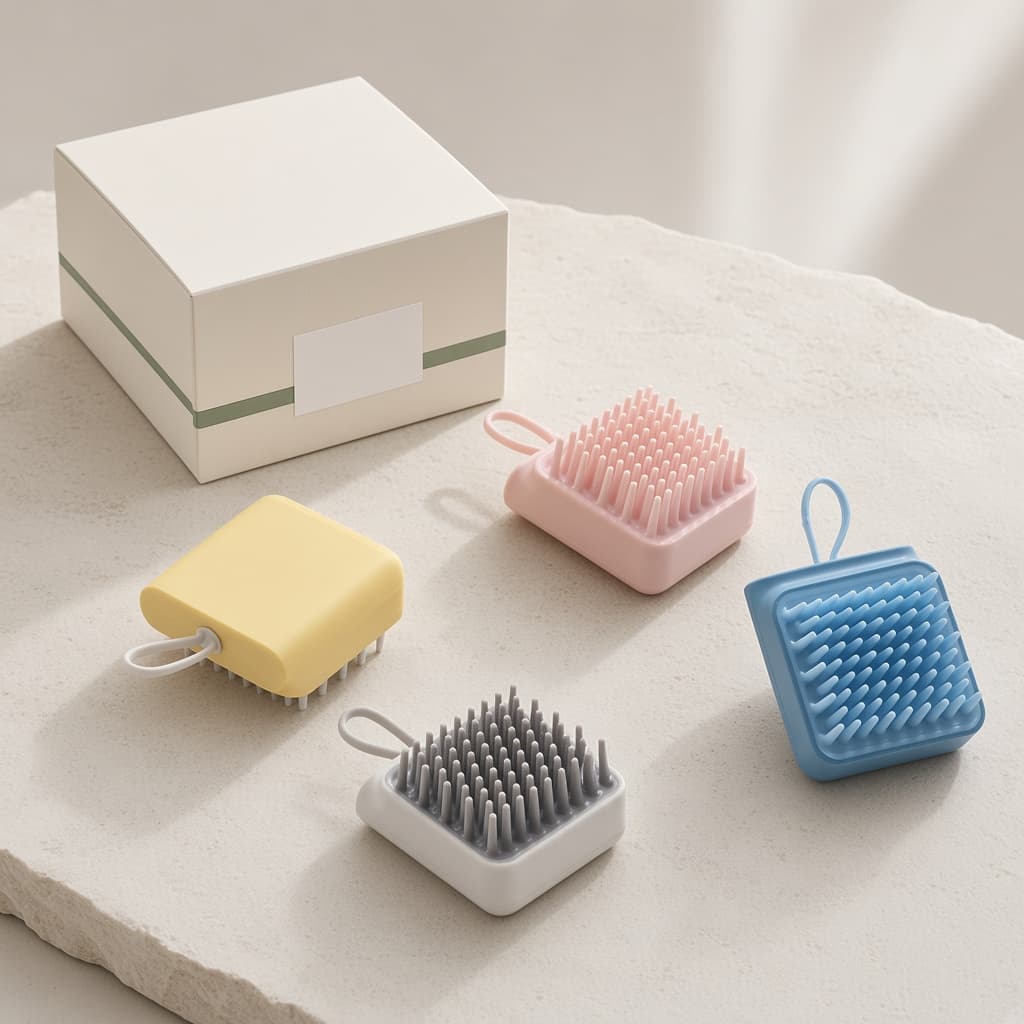
Silicone bath brush with shampoo reservoir
Works the shampoo down to the skin and massages, so the bath does not stop at the tips of the coat.
€4.90
Compare
| Compare | Folding grooming table with arm and noose | Silicone bath brush with shampoo reservoir |
|---|---|---|
| Format | tool | brush |
| Best for | Brings the dog up to the height of your hands and keeps him there, so the session does not end on the bathroom floor. | Works the shampoo down to the skin and massages, so the bath does not stop at the tips of the coat. |
| Role in the routine | Core | Core |
| Reorder | One-time | One-time |
| Price | €247.90 | €4.90 |
Community experiences
PerroAmante Circle
Join the PerroAmante Circle
Your first purchase opens the door to our private community: problem-specific discussions, local vet and groomer recommendations, and reorder support.
Guides and articles
Recommended professionals
Vets and groomers who help with this problem, recommended by members.
Frequently asked questions
Does shaving my dog make it shed less?
No. The hair keeps falling, only shorter and harder to pick up. In double-coated breeds, shaving also changes how the coat grows back and leaves the skin unprotected. Brushing with the right tool removes the hair that was going to fall before it does.
How long does a normal shed last?
Three to six weeks, twice a year. The proof it is going well is less hair in the brush each week. If at eight weeks it is unchanged or bald patches appear, it is no longer a shed: it is time for the vet.
Do de-shedding tools damage the coat?
Used carefully and on the right coat, no. The proof is in the result: they should bring out soft, cottony dead hair, never healthy hair or irritated skin. If you are pulling or pressing, change the tool or the technique. The ones we select have passed our 7-criteria score, including edge safety.
Does this require a subscription?
No. A tool is bought once and lasts years. If your vet recommends a coat supplement, you can receive it when due and cancel in one click from your account. Refills exist so you do not run out, not to hold you.
Join the PerroAmante Circle
Your first purchase opens the door to our private community: problem-specific discussions, local vet and groomer recommendations, and reorder support.